Home

Behavioral consultations and dog training for a rich and fulfilled doglife

Your senior dog is still adventurous

Activating a senior dog outdoors can be a challenge for many dog ​​owners. We want the best for our dogs, but they might have osteoarthritis, they're a little stiff, or not very motivated to go outside, especially in freezing temperatures, ice, and snowy winterscapes.

The good news is that your dog is definitely motivated to do stuff with you, even if their bodies don't always cooperate. It's all about adjusting the pace, focusing on mental stimulation, triggering the curiosity that all dogs have, both old and young, and taking into account any health challenges your dog may have. The goal is to keep your dog motivated, confident, curious, and physically and mentally active without overexerting them.


Here are some suggestions for everyday adventures you can go on with your four-legged senior friend.

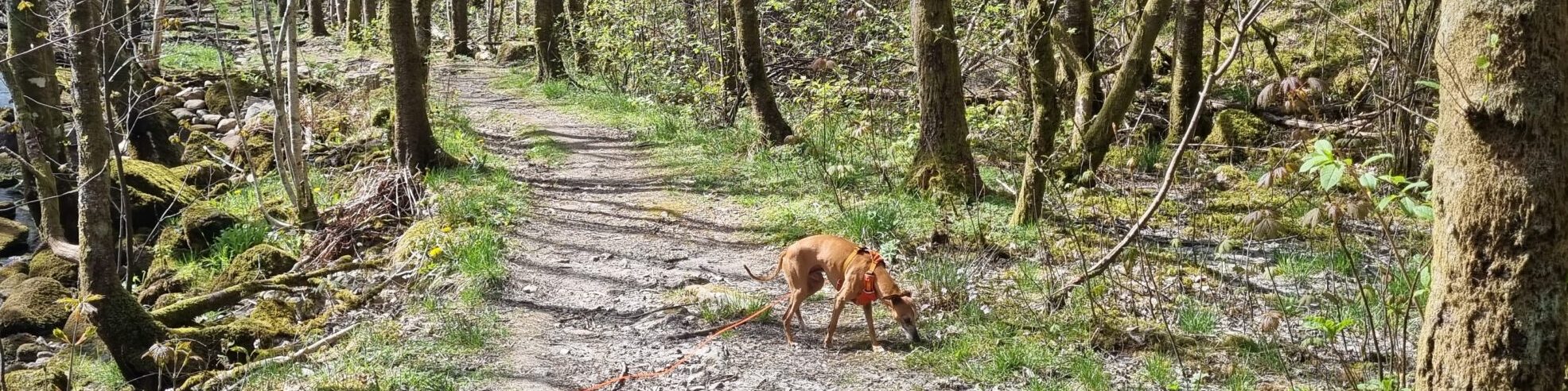
Calm expeditions and sniffaris: Let your dog set the pace and where to go. Long, calm walks where your dog can use their sense of smell are excellent mental training. Use a long leash, at least 3-4 meters, and let your dog sniff everything and stop as often as they want to. Whether the walk is 50 or 500 feet doesn't matter, this is your dog's walk, they decide how it unfolds.


Nosework and searching:
Hide treats or toys in the garden, in the grass or on a tree trunk along the road, and let your dog search. This stimulates your dogs brain without requiring much physical effort. Do a teddy bear hunt where you hide a toy or something your dog loves and then he can calmly walk and sniff his way to it. Throw out a handful of treats on a downhill slope in the garden or along the road, your dog will practice “yoga” as they walk on uneven terrain and search for the treats. Sniffing activities work well indoors as well on wet, cold days.


Swimming and wateractivities Swimming can be a great activity for older dogs as it is gentle on the joints (low/no impact), while providing good cardiovascular exercise and keeping the “engine” running. Not all dogs like water, but with gentle introduction with a reward-based dog trainer, most dogs can become comfortable in the wet elements. Put on a life jacket and preferably an inflatable ring around the neck to give the dog better buoyancy and support around the head so they stay above water. A saltwater pool or sea bath is ideal. Wading up to the knees can also be a gentle activity and provide good bilateral movement and train balance and proprioception for dogs of all ages.


Play on treetrunks on hikes (balancing games) If you find a tree trunk from a fallen tree, your dog can walk on it or crawl under it. This improves coordination (proprioception) and strengthens the core muscles.


Social processing - "people watching" Bring a blanket to a park and let your dog observe your surroundings from a distance. This provides environmental training and stimulation for older dogs who may not be able to walk far. If your dog is a little anxious or stressed, make sure to keep a safe distance from what is stressing your dog, so that he doesn't react, but can observe his surroundings calmly and quietly. Do a little treat seach en route, maybe bring a chew bone for your dog to enjoy on your "picnic"? If you live in a place where it rains a lot, you can find cover under some dense trees, bring an umbrella, or bring a small tarp with you and hang it over some trees where you sit. If you have a car, you can sit in the car and watch the world go by with your dog, listening to the calming rain :-)


Short training sessions: Practice simple commands that don't require anything physical from your dog. For example, high five, bark on command, swap an item with another, "drop -it", "pick up" an item from the floor or sofa, teach them to put their nose against your palm or touch something you point at. Observation training like "do as I do" where they have to watch what you do and repeat it is also a lot of fun. Commands like lie down, sit, jump, stand on two legs require physical effort and are NOT optimal for a senior dog with joint problems or other health challenges, so always consider what you are asking for :-)


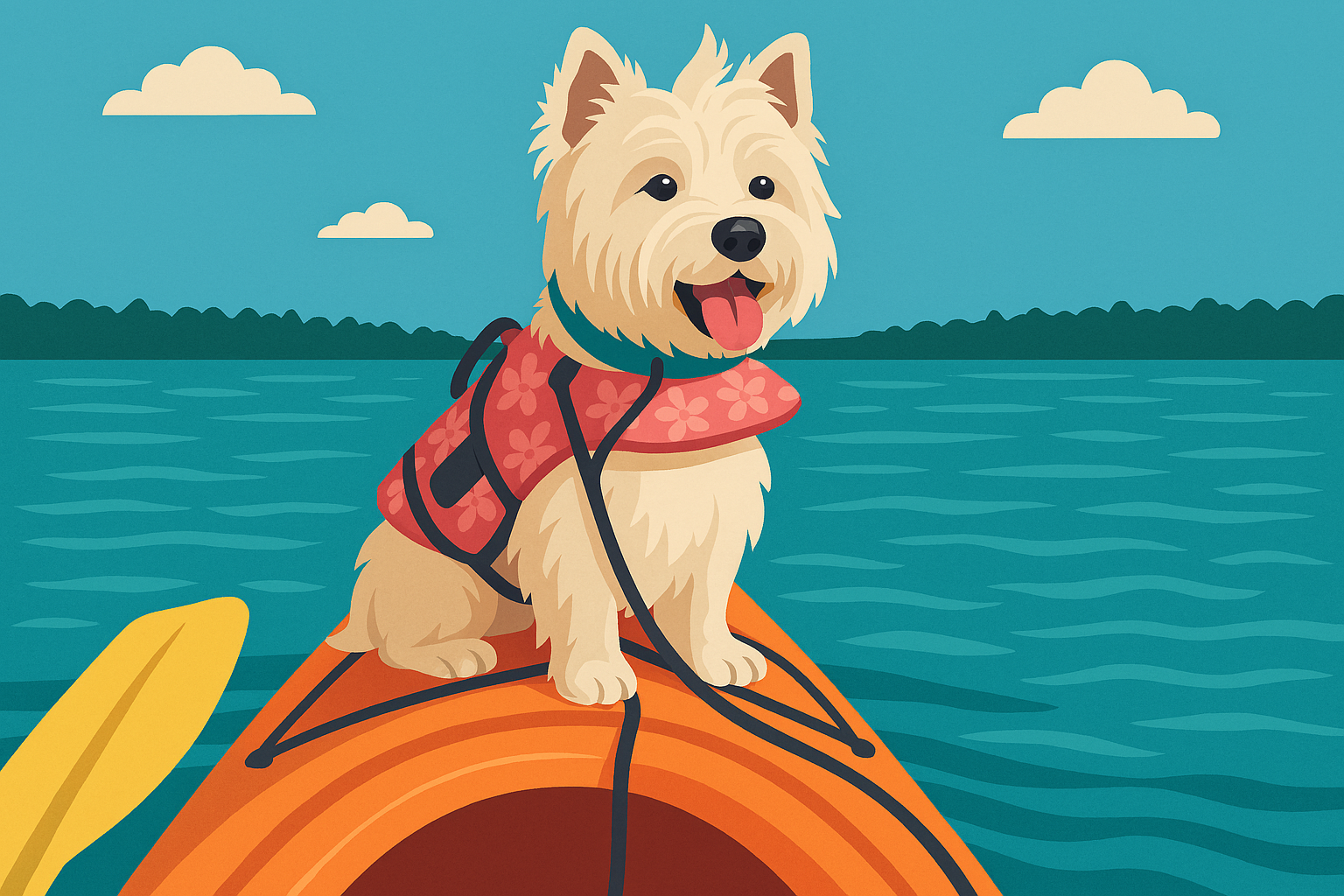
Boatrides or Kayaking: A Kayak/canoe or boat trip (with a life jacket) is a great way for your dog to experience new things without having to walk themselves. Many dogs like the smell and sound of water, and it relaxes them – The sun reflects off the water surface and can hurt your dog's eyes. You have sunglasses – maybe buy a pair for your dog as well?

Important considerations when going on adventures with your senior dog:
It depends...: Your senior dog has good days and bad days - it kinda depends on the day. Shorter and more frequent walks are often better than one long walk. Pay attention to how your dog is feeling and what they seems motivated to do on any particular day.
Avoid hard surfaces:- Choose soft trails in the woods over asphalt if and when possible.
Put some clothes on: Older dogs are more sensitive to heat and cold. Make sure they don't freeze in the winter or overheat in the summer. Dogs with osteoarthritis often need more clothing in wintertime as their joints get stiff and hurt.
Watch the joints: Unngå hopp inn og ut av høye biler eller bratte trapper. Vurder ramper inne i huset og ute ved bilen, eller en sele hvor du kan hjelpe og løfte hunden din inn i bilen. Legg ned en sti av tepper gjennom hele huset som hunden kan gå på: Glatte gulv er som prikkedøden for hunder med muskel- og leddutfordringer (i alle aldre). Løping og hopping etter frisbee og ball er også harde sammenstøt for leddene- Hundene løper og hopper selvom de har vondt. De klager ikke, er høye på dopamin og adrenalin, men det kan likevel gjøre vondt og vi bør skåne dem for den type høy impakt belastninger, spesielt når de er eldre.
Sign up for our newsletter

Give your dog a relaxing Christmas holiday

Give your dog a relaxing Christmas holiday🫎

It's the eason to be merry, whether you celebrate christmas, Hanukka or not really anything at all, it is a season for celebration for many of us.

It's easy to assume that our dogs appreciates the holidays as much as we do, but that might just not be the case. Wagging dogs, enthusiastically barking dogs, dogs licking our faces and jumping on us may not be as happy as we think. They might just be stressed and need a safe place to stay, shielded for the loud Christmas music, unfamiliar children running around the house, loud voices and new impressions.

Note!: Never leave kids and dogs alone in a room. If the grown-ups leave the room, take either the kids or the dogs with you. No matter how kind and nice your dogs and kids are, things can go wrong very quickly. If your dog gets spooked, pulled on the ear, stepped on or used as a mini horse, the dog might feel pain, fear og get startled and can bite on reflex - these are redirected behaviours and has nothing to do with aggression or previous behaviour patterns - it can happen to all dogs and unfortunately all kids can be bitten in a situation like this.

How do you know if your dog is stressed and needs a shielded space?

Anything that deviated from your dog's normal behavioural patterns can indicate that your dog is feeling stressed:

  • Cautions wagging tale waving back and forth (helicopter tail 360 degrees means happy, for sure)
  • Your dog is licking their mouth and/or yawning
  • Can't settle, paces back and forth and won't lie down
  • panting or drooling
  • exaggerated licking on guests (or your) arms, faces or otherwise (this is called appeasement)
  • Leaning in on your guests doesn't necessarily mean that your dog likes your guests - it might also be that they need to control the guests and anticipate movement
  • Goofy play moves out of context or other things that seems strange and out of character (this is displacement behaviours)
  • Licking around the mouth, holding one front paw up in the air, shaking in other situations than normal
  • More or less appetite than usual
  • Pulling on the leash (if they nomally don't pull)

These are just a few of many things you can look for to see if your dog is stressed. You know your dog the best, so look for all unusual behaviours that are exaggerated or not normal for your dog . All these behaviours may be your dog trying to tell you that they need a quiet getaway during the holidays:-)

What does a safe place look like for your dog?

A place where your dog can rest and thrive, without much traffic. Some dogs like a place where they can observe and look at what's going on, whereas other dogs might prefer less visual stimuli and less interaction. Through observation you can see what's best for your dog. The most important thing is for us to remember that our fourlegged family members also have their own thoughts, feelings and preferences when it comes to celebrating Christmas or any other seasonal holiday.

Make sure your dog doesn't eat any food it's not supposed to - Christmas might change into a scary and hazardous place!

How do you know if your dog is suffering from separation anxiety?

Separation anxiety is one of the most challenging behavioral problems in dogs. Many dogs with separation anxiety suffer in silence – their owners don’t know they have it – or have been told by a trainer to let the dog “howl” and that the dog is trying to “dominate” the owner and that the behavior should be ignored. This is an old-fashioned and incorrect perception of separation-related behaviors. Dogs with separation anxiety need to be taken seriously and given help and support to become comfortable alone at home – and yes, it is possible to do so :-)


What is separation anxiety?

Separation anxiety is one of the most challenging behavioral problems in dogs. Many dogs with separation anxiety suffer in silence - their owners don't know they have it - or have been told by a trainer to let the dog "howl" and that the dog is trying to "dominate" the owner and that the behavior should be ignored. This is an old-fashioned and incorrect perception of separation-related behaviours. Dogs with separation anxiety need to be taken seriously and given help and support to become comfortable alone at home – and yes, it is possible to do so :-)


CAtegories of Sepatation Related Behaviours (SRB)

Separasjonsrelaterte atferder kan deles inn i følgende hovedkategorier:

  • Frustration. Thedog gets frustrated when it can't access it's person or resource.
  • Cannot be alone: Hunden sliter med å være alene, uavhengig av hvem som er til stede.
  • Kan ikke være adskilt fra eier: Hunden klarer ikke separasjon fra sin(e) signifikante person(er), selv om andre er til stede. Dette kaller vi hyper-tilknytning hyperattachment)

De «store» tegnene på separasjonsangst

De mest typiske og tydelige tegnene på separasjonsangst inkluderer:

  1. Overdreven bjeffing, klynking, gråt og uling
  2. Tygging eller ødeleggelse av gulv, vegger og dører – særlig rundt utganger – dører/vinduer
  3. Frantiske forsøk på å rømme, noen ganger med selvskading som resultat
  4. Urinering eller avføring inne, selv hos husrene hunder
  5. Angst før eier drar – hunden blir stresset allerede ved tidlige/små tegn til avgang

Det er viktig å merke seg at ikke alle hunder viser alle disse tegnene. Noen kan ha kun ett eller to symptomer, eller vise mindre åpenbare symptomer som beskrevet i neste avsnitt.


Mindre åpenbare tegn på separasjonsangst

I tillegg til de «store» tegnene, finnes det en rekke subtile symptomer:

  • Overdreven slikking på segselv, eier eller objekter
  • Salivering, sikling
  • Freezing (stivner, fryser)
  • Tilbaketrekking, gjemmer seg
  • Vidåpne øyne, ører bakover
  • Kryper sammen, gjør seg liten
  • Pesing, lavmælt klynking eller uling
  • Skjelving, traving frem og tilbake i huset (pacing)
  • Tarmproblemer/”stressmage” – dårlig fordøyelse i perioder

I tillegg er det en rekke andre tegn som kan indikere at hunden er redd for å være alene. Vi kaller disse tegnene for dempende signaler. Hunder bruker signalene for å stresse seg selv ned og dempe sine omgivelser, Disse tegnene kan være vanskeligere å oppdage, men er viktige for å forstå helheten i hundens angst.


Hyper-tilknytning: Når separasjonsangst handler om én person

Omtrent 20 % av alle tilfeller med hjemme-alene-problemer skyldes at hunden har en ekstrem tilknytning til én eller noen få personer. Dette kalles hyper-tilknytning. Hunden går «over terskel» selv om andre mennesker er til stede, og klarer ikke å være adskilt fra personen hunden har en “usunn” tilknytning til.

Når skal du mistenke hyper-tilknytning?

  • Hunden blir stresset selv om andre familiemedlemmer eller venner er til stede, så lenge personen(e) hunden er knyttet til er borte.
  • Tradisjonelle treningsmetoder fungerer ikke – hunden klarer ikke å roe seg uten sin(e) person/personer tilstede.

Moderne treningsprotokoller for separasjonsangst og hyper-tilknytning

1. Gradvis desensitivisering

Desensensitivisering er gullstandarden for behandling av separasjonsangst. Hunden trenes til å være alene i svært korte perioder, som gradvis økes. Viktige prinsipper:

  • Start med sekunder eller minutter, og øk gradvis.
  • Nøytral avskjed – ikke gjør et stort nummer ut av å gå.
  • Prøv å unngå signaler hunden har lært at er tegn på at du skal gå (ta nøkler, ta på jakke, ta på sko osv), og gjør dette utenfor, ha alltid vesken i bilen osv.
  • Bruk kamera for å se hva hunden takler – gå hjem ved tegn på stress/uro når du trener
  • Målet er at hunden aldri skal gå over terskelen for når den føler seg redd eller har angst
  • Vær tålmodig – prosessen kan ta uker eller måneder.

2. Andre ting å tenke på

  • Ikke bruk godbiter eller slikkeatter for å distrahere hunden når du går
  • Bruk rolig musikk eller feromonprodukter som f.eks. Pet Remedy som kan ha en beroligende effekt på hunden – men vil ikke fjerne separasjonsangsten
  • Sørg for daglig fysisk og mental stimulering
  • Sørg for at hunden opplever autonomi i hverdagen
  • Pass på at hunden får dekket grunnleggende behov som nok mat, vann og søvn/hvile

3. Spesialprotokoll for hyper-tilknytning: Spreading the Love

For hunder med hyper-tilknytning er det viktig å lære at andre mennesker også er trygge og morsomme:

  • Involver 3–4 personer (familie, venner, hundepassere).
  • Disse personene gir mat, leker, trener og belønner hunden.
  • Eier(e) kan gradvis trekke seg tilbake fra «det morsomme».
  • Målet er at hunden skal oppleve trygghet og glede med flere personer, ikke bare énciteturn6fetch_file.

4. Medikamentell støtte

For noen hunder er angstnivået så høyt at medisiner er nødvendig for å gjøre treningen mulig. Dette må alltid vurderes og følges opp av veterinærciteturn6fetch_file.


Viktige prinsipper og fallgruver

  • Straff forverrer angst – aldri bruk straff eller negative konsekvenser.
  • Brå separasjoner uten trening gir tilbakefall – alltid tren gradvis.

Forebygging

  • Start tidlig med alene-trening for valper (fra 8–12 uker).
  • La valpen være alene i korte perioder, selv når du er hjemme.
  • Tren “borte – BØ” (peek a boo) med valpen, så de lrer konspetet om objekters permanens (selvom valpen ikke ser deg så eksisterer du fremdeles)
  • Belønn ro og selvstendighet.
  • Involver flere personer i hundens liv.

Oppsummering

Separasjonsangst og hyper-tilknytning er komplekse, men kan behandles med moderne, vitenskapelig baserte metoder. Nøkkelen er tålmodighet, gradvis trening, og å bygge trygghet – ikke dominans. Husk at profesjonell hjelp og medikamentell støtte kan være nødvendig for de mest krevende tilfellene.


Referanser

  • Julie Naismith, SA Pro™ Behavior Consultant: SRB Categories, Signs of SA, Hyper-Attachment Protocol
  • Hallgren, A. (2025). Hundeadfærd: Se her, hvordan du løser almindelige udfordringer. Alt.dk

Small Dog syndrome – Hva er det?

Har du en liten hund og sliter med bjeffing, knurring og utagerende atferd som du ikke forstår? Det kan hende hunden din har Small Dog syndrome – her kan du lese hva du kan gjøre med det:


Small Dog Syndrome – Myte eller misforstått atferd?

Begrepet “Small Dog Syndrome” brukes ofte for å beskrive små hunder som viser det mange tolker som “overkompenserende” atferd – bjeffing, ulike typer aggressjonsatferd som knurring, biting, bjeffing, glefsing, utagering eller ressursforsvar. Men hva er det egentlig som skjer?

Hva er egentlig Small Dog Syndrome?

Tradisjonelt har uttrykket blitt brukt for å forklare hvorfor små hunder kan virke mer “aggressive” eller “usikre” enn større hunder. Det antyder at små hunder prøver å kompensere for sin størrelse ved å være mer dominerende eller kontrollerende. Eller at de generisk er mer tilbøyelige til bjeffing, ressursforsvar eller utagerende aggressiv atferd. Dette er en forenklet og misvisende forklaring på hva som skjer.

Moderne forståelse: Atferd er et resultat av gener, miljø og erfaring

I dag vet vi at hundeatferd formes av en kombinasjon av genetikk, læring, miljø og relasjon til menneskene hundene har rundt seg. Små hunder har ofte:

  • Mindre kontroll over sine omgivelser: Små hunder ser ofte ikke hva som skjer oppe “i høyden” der vi lever, og føler at de mangler kontroll over omgivelsene sine – det er ubehagelig.
  • “Usynlige” og kan bli tråkket på og skade seg: De fleste småhunder har nok opplevd å bli tråkket på, dyttet borti eller bli oversett på en måte som kan gjøre dem mer oppmerksom og årvåkne når de er ute i verden og må passe på hva som skjer.
  • Mindre autonomi og selvstendighet: Små hunder blir ofte båret, skjermet eller isolert fra andre hunder og miljøer, noe som kan føre til at de ikke får bygge selvtillit og oppleve autonomi og kontroll over eget liv på samme måte som større hunder
  • Ubevisst lavere krav til små hunder: Mange eiere tar ikke affære når små hunder vise usikkehet og ubehag, fordi konsekvensene av atferden ikke oppleves som like truende som hos store hunder. Små hunder kan derfor ha endel tillært atferd som store hunder ikke har uten at eierne hjelper hunden med å håndtere følelser og stressatferd.
  • Overbeskyttelse: Når eiere griper inn for raskt eller beskytter hunden fra normale sosiale situasjoner, kan det hindre utvikling av trygghet og mestring.

Er det syndrom – eller stress?

Denne årvåkenhenten og manglende autonomien som små hunder opplever kan fort utvikle seg til stressatferd og gjøre dem mer nervøse og at de føler de må handle proaktivt for å unngå ubehagelig situasjoner som de har lært. Det vi ofte tolker som “Small Dog Syndrome” er i mange tilfeller små hunder som tydelig vise avstandssøkende signaler. Over tid har disse små hundene forsøkt å kommunisere med eierne sine at de har det stressende, ved å snu bort hodet sitt, gjespe, løfte opp en pote, gå i bue, og brukt masse dempende signaler. Men det er ikke blitt lyttet til. Hunden går da over i noe vi kaler “avstandssøkende signaler” som bjeffing, knurring eller glefsing da de føler de må “snakke høyere” for å få oss til å lytte til dem. Det er på samme måte som at endel mennesker begynner å rope hvis ingen lytter til dem når de snakker normalt. En blir litt desperat, og gjør alt for å bli hørt og sett, særlig hvis en befinner seg i knehøyde , eller enda mindre… Det vi mennesker tolker som aggresjon eller dominans er uttrykk for utrygghet og opplevde stressende situasjoner.

Hva kan vi gjøre?

  1. Lær å forstå hundens dempende og avstandssøkende signaler – Rolig hund underviser i hundespråk
  2. La hunden gå tur i løs, lang line, snuse og oppleve verden i eget tempo
  3. Behandle hunden din som om den veier 50 kilo
  4. Unngå å overbeskytte – la hunden få utforske og mestre selv.
  5. Bruk positiv forsterkning og belønn ønsket atferd.
  6. Gi hunden hverdagsvalg så de føler kontroll og selvstendighet
  7. Les kroppsspråket og ta det på alvor – små hunder har like komplekst språk som store.

Konklusjon

“Small Dog Syndrome” er et uttrykk som ofte dekker over manglende forståelse for små hunders behov og signaler. Ved å lære å forstå hundespråk, ved å møte dem med samme respekt, verdighet og trygghet som vi gjør med større hunder, kan vi bidra til mer balansert og harmonisk atferd – uansett størrelse.


Ønsker du å vite mer om hundens språk? Kontakt oss for en atferdstime fullpakket av informasjon og forskning om hund og hundens språk og signaler

Separation Anxiety - Is your dog afraid of being home alone?

What is separation anxiety (SA)?

Separation anxiety are behaviors that dogs exhibit when left alone. A more accurate term would be separation-related behaviors, as these behaviors occur exclusively or are intensified in the owner's absence. These behaviors can range from barking, whining, and pacing to destructive behaviors, inappropriate elimination, and even self-harm. Your dog is desperately trying to escape a perceived danger - which is being without you.

How to I know if my dog has separation anxiety?

Observe your dog's behavior when you are away. Key indicators of separation anxiety include:

  • Drooling, salivating
  • Destructive behavior or escape attempts
  • Inappropriate elimination
  • Vocalization (barking, howling, whining)
  • Hyperactivity or hypervigilance
  • Freezing or cowering standing or laying down (sometimes when dogs are in crates, they are not relaxing - they are actually in a freeze state of fear).
  • Self-harm (licking, tail chasing)

If your dog exhibits any of these behaviors only or primarily when left alone, it is very likely they are experiencing separation anxiety.

In separation-related issues, determining whether a dog feels fear or anxiety is difficult, as both trigger similar physiological responses. Luckily, the training method remains the same, focusing on increasing the dog's tolerance for being alone.

Is it my fault that my dog has separation anxiety?

It's common for owners to feel guilty about their dog's separation anxiety. It's crucial to understand that the cause is often multifactorial and not owner related. While genetics, early life experiences, and maternal influences play a role, an owner's actions do not directly cause separation anxiety. Instead of blaming yourself, focus on providing support for your dog and Contact us to get help implementing a training plan.

We always train below threshold - your dog should never feel afraid or anxious when you are working with Norwegian Dogtrainger!

Norwegian Dogtrainer

We will never suggest for you and your dog to train above your dog's threshold. Studies and learning theory tells us that it doesn't really work - It can create more fear and more anxiety without having an impact on your short and long term training objectives.

Aversive training methods, such as punishment or shock collars, are strongly discouraged for separation anxiety. These methods inflict fear and pain, potentially worsening the problem by creating negative associations with being alone as well as affecting your dog's memory, motivation and ability to learn new things.

What is desensitization, and how can it help my dog with separation anxiety?

Desensitization is a gradual process of exposing the dog to a low-intensity version of what it is afraid of - being home alone. By systematically and patiently working through a desensitization training plan that we tailor for your dog, you can help your dog build self-confidence and tolerance for being alone at home, while you can go out with a clear conscience knowing that your dog is fine being at home without you.

How do you know if your dog's in pain?

- and what can you do about it?


Hvordan kan du som hundeeier vite om hunden din har det bra?

Hunder viser sjelden tegn på at de har vondt før det er gått veldig langt. De kan skjule smerte og ubehag, både fordi de er flinke til å tilpasse seg, og fordi det i naturen ikke lønner seg å vise svakhet. Kroppen deres (og vår!) har mekanismer som kan dempe smerte, som for eksempel å frigjøre dopamin og andre stoffer som gjør at de føler seg bedre der og da.

En måte hunder viser smerte på er ved atferdsendring– kanskje blir den roligere, mer irritabel, trekker seg unna, eller virker uinteressert i ting den vanligvis liker. Dette er kroppens måte å beskytte seg på, og det kan være lett å overse. På den andre siden kan hundene også fortsette som før, være like glad i tur, elske å løpe etter ball og frisbee og trosse smertene sine. De virker tilsynelatende helt friske og smertefri helt til smertene blir så store at de ikke kan skjule dem lengre.

Derfor er det viktig at vi som eiere følger med på små endringer i atferd og tar hundene på alvor. Ved å være oppmerksomme og åpne for at noe kan være galt, gir vi hundene våre den beste sjansen for et godt og trygt liv og kan hjelpe dem når de har det vondt.

Vanlige smertetegn hos hund


Vi merker gjerne at hunden er annerledes, men det kan ta tid før vi setter det i system, og skjønner at noe er annerledes. Her er noe du kan se etter som du kan si til veterinæren når du tar opp med dem om hunden din har det vondt:

  • Hunden begynner å knurre på barna i huset, snerrer eller viser aggresjon inne/ute
  • Hunden trekker seg tilbake og er mer reservert
  • Hunden er desinteressert i ting den likte tidligere (anhedonia)
  • Hunden vil ikke gå tur lenger, eller snur og bremser etter bare en kort tur
  • Hunden biter eller slikker på potene sine
  • Virker sliten og hviler mer
  • Dårlig appetitt/økt apetitt – spiser raskere eller langsommere enn før
  • Endring i rutiner for å tisse og gå på toalettet
  • Begynner med/slutter med atferder den tidligere ikke har gjort/har gjort?
  • Hunden spiser ikke – spiselige objekter
  • Hunden får tørr hud, matt og dårlig pelskvalitet
  • Muskelsvinn – mindre atletisk fremtoning
  • Klarer ikke hoppe inn i bilen, eller sofaen eller sengen lengre uten å kompensere med å løfte seg opp eller “ta sats”, det ser vanskelig og anstrengt ut

Hva kan du som hundeeier gjør for å hjelpe hunden din?


Trene bort – eller finne rotårsaken?

Mange hundeeiere søker hjelp når hunden begynner å oppføre seg annerledes – Ofte ønsker vi bare å få slutt på den uønskede atferden, men glemmer at atferden ofte er et symptom, ikke selve problemet.

Hvis vi bare prøver å trene bort atferden uten å finne årsaken til hvorfor hunden har endret seg, risikerer vi å gjøre vondt verre. Hunden kan føle seg misforstått og enda mer stresset og en får ikke løst det underliggende problemet, som kan være sykdom, frustrasjon eller smerte.

Tips for å logge atferdsendring

  1. Se etter tegn: Endringer i pels, muskulatur, appetitt, drikkelyst, eller økt følsomhet for lyd og lys kan være tegn på at noe er galt.
  2. Observer og skriv ned: Før en enkel dagbok over hva som skjer, når og hvor. Det kan hjelpe deg (og veterinæren) å se mønstre.
  3. Besøk veterinær: Selv uten synlige skader kan det være smerter eller sykdom. Ta med dagboken – den gir viktig informasjon.
  4. Sikre hjemmet: om nødvendig- Bruk grinder eller dører for å beskytte barn og dyr mens dere jobber med utfordringene. Lag et rolig sted hvor hunden får være helt i fred. Lær alltid barn at de skal la hunden være, og monitorer nøye når barn og hunder er sammen. En hund med smerte kan ha redusert impulskontroll og føle behov for å beskytte seg mot barnas raske bevegelser, høye lyder og manglende kroppskontroll. I slike situasjoner kan den snilleste hunden i verden bite, hvis ikke de ser noen annen utvei.
  5. Unngå kjefting: Vis forståelse og tålmodighet. Hunden din prøver ikke å være slem, eller trassig – den prøver å fortelle deg noe. Stol på magefølelsen – du kjenner hunden din best.
  6. Få hjelp: En atferdskonsulent kan hjelpe deg å forstå hva hunden prøver å si, og gi deg verktøy som tar hensyn til både atferd og helse.

Målet er ikke bare å endre atferd, men å hjelpe hunden tilbake til en trygg og smertefri hverdag. Book en time hos Rolig Hund for å få bekreftet dine mistanker og finne rotårsaken. Jeg kan også hjelpe deg å skrive notat/rapport som du kan ta med til din veterinær slik at de lettere kan diagnostisere og lete på riktig sted, dersom noe er galt.


Feeding raw and fresh food to dogs

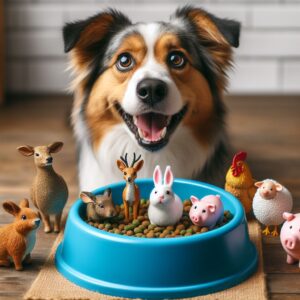
Dogs are carnivores ( and omnivores) and need a varied diet to support a long and healthy life. Just like us they are curious and enjoy variation and new experiences.
Always monitor your dog when they are eating. NEVER take the food away from your dog when they eat, this may lead to resource guarding. Make sure that the bowls are placed in such a way that the dog is comfortable standing and eating. Vary the height until you find the height that your dogs seems the most comfortable with. Make sure the dog can stand on a non-slip surface while eating.
Make sure your dog isn't hungry when you're doing learning activities with them. Hungry dog = zero concentration and often increased frustration. To feed a dog its meals from a slow feeder or a LickyMat can increase frustration, especially in puppies and adolescent dogs, but also in adult dogs.

How to easily feed raw and fresh food to your dog

  • Meat, fish, vegetables are good. Small amounts of eggs and some grains are okay.
  • Feed Meat , chicken, turkey, pork (pork needs cooking).
  • Game and beef in variation can be cooked and made into minced meat.
  • All Innards are good for your dog - and cheaper too!
  • Boiled fish of all kinds and boiled veggies
  • Vegetables should not make up more than 10% of a meal - you can feed broccoli, spinach, carrot, sweet potatoes,
    seaweed, beans, pumpkin, blueberries - you can blend the vegetables into a pure and add some spices and herbs ( I add a little
    bit of meat fond that I get from cooking out the frying pan with
    water after I cook some meat. Add it to the purèe to make it extra interesting - you can keep a batch of purèe in the fridge for a few days, or even put it in the freezer if you make a bigger batch.
  • Cooked eggs a few times a week (in some countries like Norway it can be served raw since there's no Salmonella in the eggs). Egg whites are best digested when they are cooked.
  • Feed little or no grains to your dog, just a few crumbles or leftovers from your own food.

Put all the ingredients in your dogs bowl and feed 2-3 times a day as follows:
Puppies: 3 times a day
Adults = 1-2 times a day

How much food does your dog need?

Puppies: up to 10% of their bodyweight a day reduce slowly as
they grow older
Adult dog: ca 1,5 - 2,5 % of their bodyweight a day
Add some nuts and seeds and herbs if you like - be sure to check first - as some nuts are poisonous to dogs!
You can add some spices for flavour - I like to add a little bit of turmeric to the meat and fish when I cook
meat for my dog, it's great for joint health and also helps reduce inflammation (for humans
as well).
The key is variation - add cartilage and bone like chicken feet, duck neck,
ox tail (for bigger dogs), rabbit ears (with fur if you can) - for small dogs, chicken
neck and feet, and rabbit ears, are an appropriate size. For big dogs - make sure you don't have a dog
that gobbles things, or eats inedible objects that can be unsafe. and no antlers! Ever!
How to feed raw bones to a dog:
https://dogsfirst.ie/raw-faq/how-to-feed-a-dog-bones/

What does Safey, Curiosity and Freedom mean for your dog?

There's a reason why Safety, Curiosity and freedom is our Dog training Caveat and at the core of our business philosophy . All dogs need to explore, experience and learn in a safe environment - just like us humans.

Safety for dogs - What does it take?

We're not listing all the factors needed to make a dog feel safe - but here's a few we think are really important:

  • A safe spot to sleep where no one can bother your dog
  • Feeling safe about getting the basic needs met like food and water, not worrying about being hungry or thirsty
  • Predicatability about the owners state of mind - a dog should be able to predict how you will react in any given situastion, and not worry about being exposed to irradic, uncomfortable behaviours on your part
  • Never having to fear that anything the dog does will be punished, verbally or physically (off course you can say no to your dog - just don't be a jerk)
  • Stress free everyday living - a dog should not have to be confronted with their fears or triggers on an day to day basis (if your dog is fearful of skateboards, don't go past the skating park), make ajustments when you can
  • Felle seen and understood - a dog should feel confident that the owner understand basic dog language and signals, and not feel constant fear or worry because the owner does not understand whaat they're trying to say (don't worry, we can teach you the language)
  • A dog should feel safe to say no, and be respected
  • Physical safety in everyday life - A dog should be able to feel safe moving on the surfaces in your home and avoid injury and pain (put down rugs to avoid slippery floors, elevate the food bowls, well ajusted harness, ramps and steps to couches and beds)

Curiosity and Freedom - how do we support the dog's needs?

Dogs are curious by nature, and they love to explore when they feel safe to do so, and given the opportunity. Dogs are scavengers and omnivores (omnivores) and need to be able to display these natural behaviours. Norwegiandogtrainer can show you how - but a small tip could be to start by placing some unfamiliar objects on the floor in your livingroom for your dog every day - something they're not familiar with. Let them sniff potty plants, tea bags, the items in your shopping bag - it's exciting to experience and discover new things.

Many dogs lack freedom and autonomy in their lives, they are used to you deciding everything for them and perhaps you use a lot of commands in everyday life? Commands and tricks are not necessarily wrong - but when was the last time your dog was allowed to just be a dog and do something he wanted? Choose right or left, sniff as long as he wanted on a plant you passed by on the walk, not have to wear the rain cover on a short peeing expedition, or choose whether he wanted a chew bone or a licky mat? It is possible to give our dogs more freedom and choices - it just takes a little ajusting of habits. It's great fun watching your dog think hard about something and make a decision - and see how happy he gets when you let him choose. It's just as much fun as any other day on the agility course :-)

Thriving and better cooperation

When we help our dogs n\meet their needs, we also increase the dog's subjective sense of well-being as well as it is stress reducing. Exploration, freedom and choices also build a stronger bond between you and your dog - the more they get the opportunity to choose, and say no - the more likely they are to say yes!

How to get your dog to stop pulling on the leash

So why is your dog pulling on the leash?

There could be a wide range of reasons to why your dog is pulling on the lead.

  • Old habit
  • Stress, pain, fearaggression, learned behaviour, disease
  • A poorly ajusted harness or other equipment - your dog might be trying to get away from the discomfort of the equipment.
  • Your dog doesn't like you, or is worried or afraid of you
  • predatory behaviour or maybe females in heath nearby?
  • Are you using a flexi lead?Your dog might be desensitised to the pulling as there's always tension on the lead.

There's always a reason, dogs just don't do things without a motivation behind it. The problem is - how do we find the reason, and what can we do to solve it?

How do you get your dog to stop pulling?

It may save you time and effort to take your dog to a dog behaviourist - we can assess and observe and help you find the reason as to why your dog is behaving the way they are. If stress and/or pain is the underlying reason, we need to look at our dog's entire life situation, not just the pulling behaviour. There are often issues that needs to be resolved prior to your dog being comfortable enough to really work on the pulling issue. When your dog is stress free, pain free and able to concentrate and learn, you can follow the steps below to practice your loose leash walking with your dog.

Start the training indoors in calm surroundings without much distractions. Train the attention sound that you'll later use outside on the walk. The goal with the attention sounds for the dog to give you their attention, not necessarily by looking (contact training) at you, but being attentive to you and ready to follow you when you turn, or follow other directions. You use operant onditioning to link the behaviour with a reward. the dog has to voluntarily offer you the behaviour of giving attention(ears listening, maybe stopping or pausing, moving in your direction - and then he gets the reward (treat praise etc). When you're nailing it indoors, you can move to a quiet spot outdoors until your dog nails it there as well, and then increase the difficulty by adding more distractions like dogs, people, birds, traffic. Eventually the dog will always be aware of you, and be attentive to your directions to the extent that all you need to do is change directions, and he'll follow. No attention sound, no yanking the lead, no cues needed other than you walking in a different direction. Doesn't that sound like a relaxing and calm walk?

Do you still find it hard to make loose leash walking work?

There are countless reasons for why you don't succeed with loose leash walking with your dog. It's always a good idea to talk to a professional trainer that know how to help you and your dog be successful. We're happy to help.

. Here's a list over a few of the most common mistakes a lot of people do (you're not alone): is being unclear when you train so that your dog does not understand what you want. Not being consistent is another one. Or that you change direction so often that the dog learns that if they just wait a little bit you will come back the other way again - because you only go a few steps the other way. If you train too often or too rarely it can also affect the result, or if you train when the dog is busy with something else or hungry. If your dog has high stress levels or underlying illnesses it can be difficult for you to teach your dog new things.

Walking on a loose leash is NOT the same as heeling!

Loose leash walking is not contact training where your dog needs to look you in the eyes. In the dog world a direct stare is considered to be rude and threathening. It's enough for our dog to either look in your direction, or too show with body language that they are paying attention to you. If you've previously trained your dog to stare at you and heel, untrain it now by not staring back, and look away until your dog gets fed up and does something else. For a dog it's uncomfortable and even painful to tilt his head to constantly look up at you. Just imagine how you feel after talking to someone on a plane, or in a meeting, where the people you talk to are seated next to you. Your neck hurts from tunring to the side. Still, many of us ask this from our dogs on walks. It may lead to other issues in your dog, like muscle tension, skewed weigh carrying, lameness, causing pain and discomfort for your dog - and stacking up Vet bills down the line!

Be Patient.

Copyright: Depositphotos

Sometimes it's one step forward and two steps back. Notice and celebrate your wins:-) Follow the recipe and do it correctly and your dog will be loose leash walking like a dream within a month or even weeks. This is off course, depending on no underlying issues that needs to be addressed first. if you suspect something else is going on

If you suspect something else is going on, please reach out to us, and we'll help you and your dog get moving in the right direction.

Does your dog need to sit on command?

Have you ever counted the number of times you ask your dog to sit during a random day? When you get up in the morning and put on the harness to go our for a little stroll? Sit. Before breakfast is served? Sit. Maybe a chewbone before you leave the house? Sit. When you come home from work and she welcomes you in the hallway, tail wagging? Sit. You then put the harness on again to go for a little walk before dinner. Sit. You exit the staircase in the building, open the main entrance door downstairs. Sit. You open the door and go outside together.

Design: Martine E. Langaard

During your walk you meet a little Yorkie, a good friend of your dog. The Guardian has a snack in her pocket and asks if she can give your dog a little treat? You say: "Yes, but only if she sits first". The owner asks your dog to Sit. She does, she gets a treat. on the way back home you ask your dog to Sit while you take the mail out of the mail box. You go inside, up the stairs. Sit. Take off the harness and enter tthe livingroom. You then go into the kitchen, she follows you - you tell her to go to her Place, and you start to make dinner. You cook sausages, cut off a small piece, ask her to come over and Sit. She does, and gets the treat. She remains there, staring loningly at the counter, stands up, gets a bit closer. You tell her to Sit again, she gets another piece of sausage. After your dinner you make her dinner. Sit. Stay. Stay. She eats it. After a while you go for your afternoon walk, same procedure, harness, Sit. Sit, open door, staircase, Sit, main door, outside. You walk around the block and you meet an acquaintance. you talk for a while, your dog would rather sniff something in the grass and pulls a little. You ask her to Sit.Wait. You go home, you sit on the couch, she want to join you. She gets a little bored after a while, you play together, you toss her favourite toy, she runs and gets it. Sit. Toss. retrieve. Sit.Toss. Retrieve and repeat. You go for an evening stroll. Harness on.Sit down.Door opens. Sit. Exit door, downstairs, Sit. Open main door, exit. Inside the house again it's time to go to bed. You climb into your bed, she sleeps by your side. "She has become a bit stiff in her body and hindlegs", you notice . "She can't always make the jump up to bed, as she used to", you think to yourself and lift her up to bed.

Dere går inn i stuen, hun følger deg inn på kjøkkenet. Du kommandere henne på plassen sin, og begynner på middagen din . Du lager pølser, skjærer av en liten bit og ber henne om å komme bort til deg. Sitt. Hun får godbiten og blir sittende å se lengselsfullt på pølsene på benken. Hun reiser seg og kommer litt nærmere. Du gir henne en pølsebit til. Sitt. Etter middagen din er ferdig lager du middag til henne. Sitt. Vent. Bli. Hun spiser, og dere gjør dere klare til å gå ut på ettermiddagstur, samme rutine som vanlig. Sele. Sitt. Døren, Sitt, ned trappen, Sitt og ut døren.

Dere går rundt kvartalen og møter en du kjenner, dere snakker litt sammen, hunden din vil helst snuse på noe i veikanten og trekker litt i båndet. Sitt. Vent. Dere går hjem, du setter deg i sofaen, hun vil komme opp til deg. Sitt, Fot og Hopp opp. Utover kvelden kjeder hun seg litt, dere leker sammen, du kaster favorittbamsen og hun henter den til deg. Sitt. Kast. Sitt. Kast. Sitt. Kast. Du gjemmer noen godbiter rundt omkring i stuen. Sitt. Let. Kvelden fortsetter. Sitt. hopp opp. Hopp ned. Sitt. Bli . Tannpuss for dere begge, du vasker potene hennes mens hun sitter på gulvet. Kveldstur – Sitt. Du tar på henne selen, åpner døren til leiligheten. Sitt. Dere går ned trappen, ned til utgangsdøren i blokken. Sitt. Du åpner døren og dere går ut sammen.

Vel inne igjen er det på tide å gå til sengs. Du går opp i sengen din, hun får lov å sove sammen med deg. Du syns hun er blitt veldig stiv i kroppen, hun klarer ikke å hoppe opp i sengen selv lenger. Mindre spenst i bakbena og litt kraftløs, tenker du og løfter henne opp i sengen din.

Think through what you and your dog do during a day. Does your dog really need to sit for a treat, for a sausage, for dinner, for meets outside, for harnesses? Many dogs and some breeds more than others 8like greyhounds and long legged dogs and puppies) are uncomfortable sitting both inside, and outside. in combination with slippery floors, it can be strenuous. Add the strain of excessive ball throwing (for some dogs), frisbee, running, fast pace walking - there are many activities that strains the muscles and joins for a dog.

If your dog wants to sit - then let her. If she'd rather stand or lie down, let her. If she prefers standing when you throw the toys, that's great. Sit is often an unnecessary level of administration and adds to the number of commands your dog gets in a day . It can also reduce the dogs sense of self determination while adding extra tention to your joints and muscle.

So how important is it for you that your dog sits? Maybe it's perfectly fine that she does whatever is the most comfortable for her:-)